
Truth Standing on Its Head
Paradox as Problem and as Principle in Chesterton's The Man Who Was Thursday
Paradox: Problem or Principle?
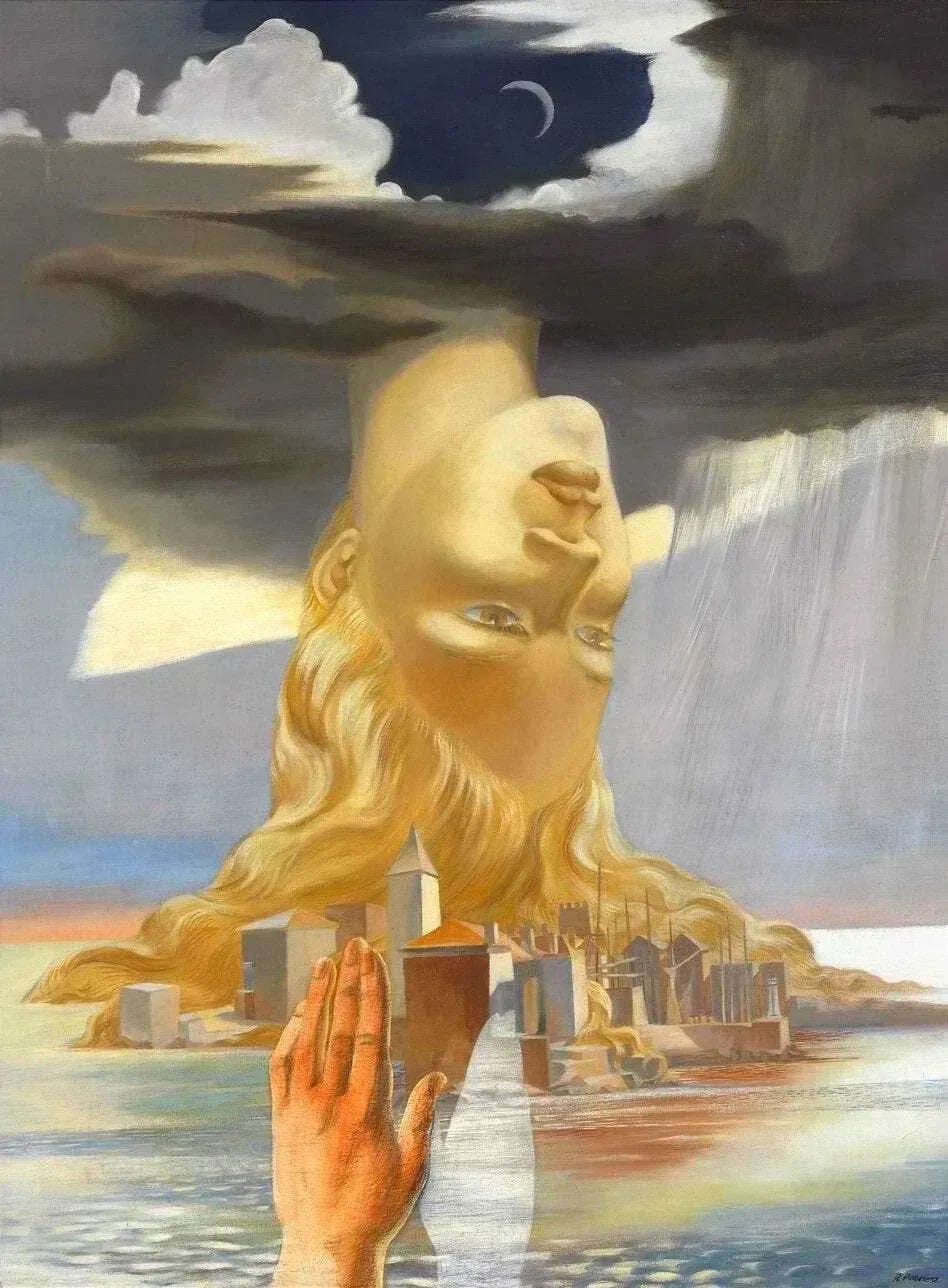
Discussing G. K. Chesterton’s use of paradox immediately risks reducing his complex thought to mere stylistic flair, treating paradox as clever wordplay detached from any serious pursuit of truth. Chesterton himself cautioned against such superficial readings, describing paradox as “truth standing on her head to get attention.”1 For him, these apparent contradictions serve to startle readers into recognizing deeper, often fundamental realities that ordinary language might obscure. As Aidan Nichols observes, the now-routine association of Chesterton with paradox has itself become a cliché that diminishes our appreciation of his work.2 Nichols cautions against the common error of viewing Chesterton’s paradoxes as mere self-contradictions, or even worse, as clever philosophical antitheses that abandon reason entirely. Nichols points out that, far from irrationalism, Chesterton consistently defends the universality of reason, a commitment that extends even into his fiction. For example, in “The Blue Cross,” Father Brown unmasks Flambeau’s crime not only through shrewd observation but by rejecting any assault on reason’s universal validity: “You attacked reason,” Brown declares. “It’s bad theology,” because to treat reason as contingent is to undermine both the mind and the created order.3
The problem of paradox in Chesterton, then, is not whether he enjoys turning phrases upside down, but whether paradox names a genuine principle for gaining knowledge and communicating reality. Does Chesterton’s celebrated inversion merely dazzle the reader with verbal wit, or does it disclose something about the structure of the world itself? And if paradox does function cognitively, does it remain only a rhetorical instrument for correcting mistaken premises, or does it ultimately belong to the very grammar through which Christian theology articulates the mystery of creation and redemption? Three of the most compelling studies of Chesterton on paradox—Hugh Kenner’s Paradox in Chesterton (1948), Frank M. Drollinger’s essay “Paradox and Sanity in The Man Who Was Thursday,” and Nichols’s own chapter on “The Role of Paradox”—agree that paradox in Chesterton is linked to fundamental questions of truth, sanity, creation, evil, and God. Yet where they differ significantly is in emphasis and method. Kenner presses toward metaphysical perception and analogy; Drollinger, in turn, treats paradox as a weapon of sanity against modern abstraction and nihilism; Nichols situates paradox within a Catholic theological realism that safeguards reason while recognizing creation’s symbolic density and acknowledging God’s “hide-and-seek” presence in nature.
Nowhere, perhaps, is this question posed with greater narrative force and philosophical ambition than in The Man Who Was Thursday: A Nightmare (1908). This is Chesterton’s most sustained fictional exploration of paradox, where the device shifts from aphorism to full dramatic structure, testing whether apparent contradictions in the world (chaos/order, evil/good, nightmare/revelation) can resolve into coherence and theological truth. By examining how Thursday dramatizes these competing interpretations of paradox, we can see it functioning in three distinct yet related ways. It appears first as a mode of metaphysical perception; second, as a defense of reason against nihilism; and finally, as a theological method. Tracing these dimensions reveals the novel’s intricate philosophical structure. Moreover, we discover its ultimate vision of reality: a world that is fundamentally paradoxical yet rationally comprehensible. In this world, God’s presence is both hidden and revealed through the very contradictions that initially seem to threaten meaning itself. Yet the novel does not simply illustrate one of these accounts; rather, it places them in tension and ultimately gathers them into a coherent imaginative whole.
2. Three Studies of Chestertonian Paradox
A. Kenner: Paradox as Metaphysical Perception
At the very commencement of his book, Kenner announces the provocative thesis of his 1948 study of Chesterton: “His especial gift was his metaphysical intuition of being; his especial triumph was his exploitation of paradox to embody that intuition.”4 Kenner’s assertion from the opening chapter is that Chesterton’s greatness lies not primarily in literary craftsmanship but in his discernment of existence and paradox as the proper expression of that insight. Kenner insists Chesterton is not merely witty or epigrammatic but a philosophical realist whose mind begins with a particularly clear perceptivity regarding being. He quotes Chesterton to demonstrate that Chesterton’s foundational starting point is ontological affirmation.
“When a child looks out of the nursery window and sees anything, say the green lawn of the garden, what does he actually know; or does he know anything? There are all sorts of nursery games of negative philosophy played round this question. A brilliant Victorian scientist delighted in declaring that the child does not see any grass at all; but only a sort of green mist reflected in a tiny mirror of the human eye. This piece of rationalism has always struck me as almost insanely irrational. If he is not sure of the existence of the grass, which he sees through the glass of a window, how on earth can he be sure of the existence of the retina, which he sees through the glass of a microscope? If sight deceives, why can it not go on deceiving? Men of another school answer that grass is a mere green impression on the mind; and that he can be sure of nothing except the mind. They declare that he can only be conscious of his own consciousness; which happens to be the one thing that we know the child is not conscious of at all. In that sense, it would be far truer to say that there is grass and no child, than to say that there is a conscious child but no grass. St. Thomas Aquinas, suddenly intervening in this nursery quarrel, says emphatically that the child is aware of Ens. Long before he knows that grass is grass, or self is self, he knows that something is something. Perhaps it would be best to say very emphatically (with a blow on the table), ‘There is an Is.’”5
Kenner opens Chapter II by confronting the widespread accusation that Chesterton was simply a “maker of paradoxes” in a pejorative sense. He cites critics who describe Chestertonian paradox as a piquant seasoning used excessively. In response, Kenner separates bad paradoxes, a verbal contradiction made for mere effect, from good paradoxes, which express the real tension inherent in being. Then he makes a further judicious distinction by elucidating three ways in which Chesterton’s paradoxes function.
i. Three Forms of Paradox
According to Kenner, the “verbal paradox is simply a weapon for overcoming mental laziness” in cultural and political discourse (56). For Kenner, Chesterton’s response to the late Victorian ideal of companionate marriage exemplifies this function. The promotion of the idea of companionate marriage beginning in the late 19th century marked a significant cultural shift in the very concept of marriage. This model was understood as a partnership between the sexes based on voluntary affection, sexual intimacy, and equality between spouses, rather than on economic, social, or traditional institutional obligations. It also tended to relegate the rearing of children to a subordinate status within such unions. Because this model also tacitly normalized divorce, contraception, and cohabitation, it elicited a typically witty and paradoxical quip from the tradition-minded Chesterton. Companionate marriage, he gibed, was “so-called because the people involved are not married and will very rapidly cease to be companions.”6 As Kenner acknowledges, Chesterton’s rhetorical paradoxes expose inadequate concepts and untested cultural clichés by means of a shock that calls forth either startled acceptance or possible repugnance in his reader.
“Chesterton might have said any of these things in a way that would have startled nobody. He did not, because the kind of success he sought, the success of conviction by illumination rather than mere acquiescence or apprehension, could only be achieved by startling; and if certain readers are startled into disgust, he cannot help that. A desperate surgeon, he either cures or kills” (57).
In addition to this rhetorical use of paradox, which “answers merely to the complexity of human folly,” Kenner identifies a second, “metaphysical use of paradox that answers to the complexity of being, especially the Supreme Being” (16). Whereas verbal paradox can be created or dissolved through strategic substitution of terms, Kenner argues that metaphysical paradox cannot be escaped, because “the intrinsic contradiction is not in the words but in the things” (17). Kenner then ties metaphysical paradoxes to analogical perception, for such paradoxes “express concepts framed from the perception of being, which is intrinsically analogical.” In other words, reality contains intrinsic tensions that cannot be resolved without the seeming distortion of paradox.
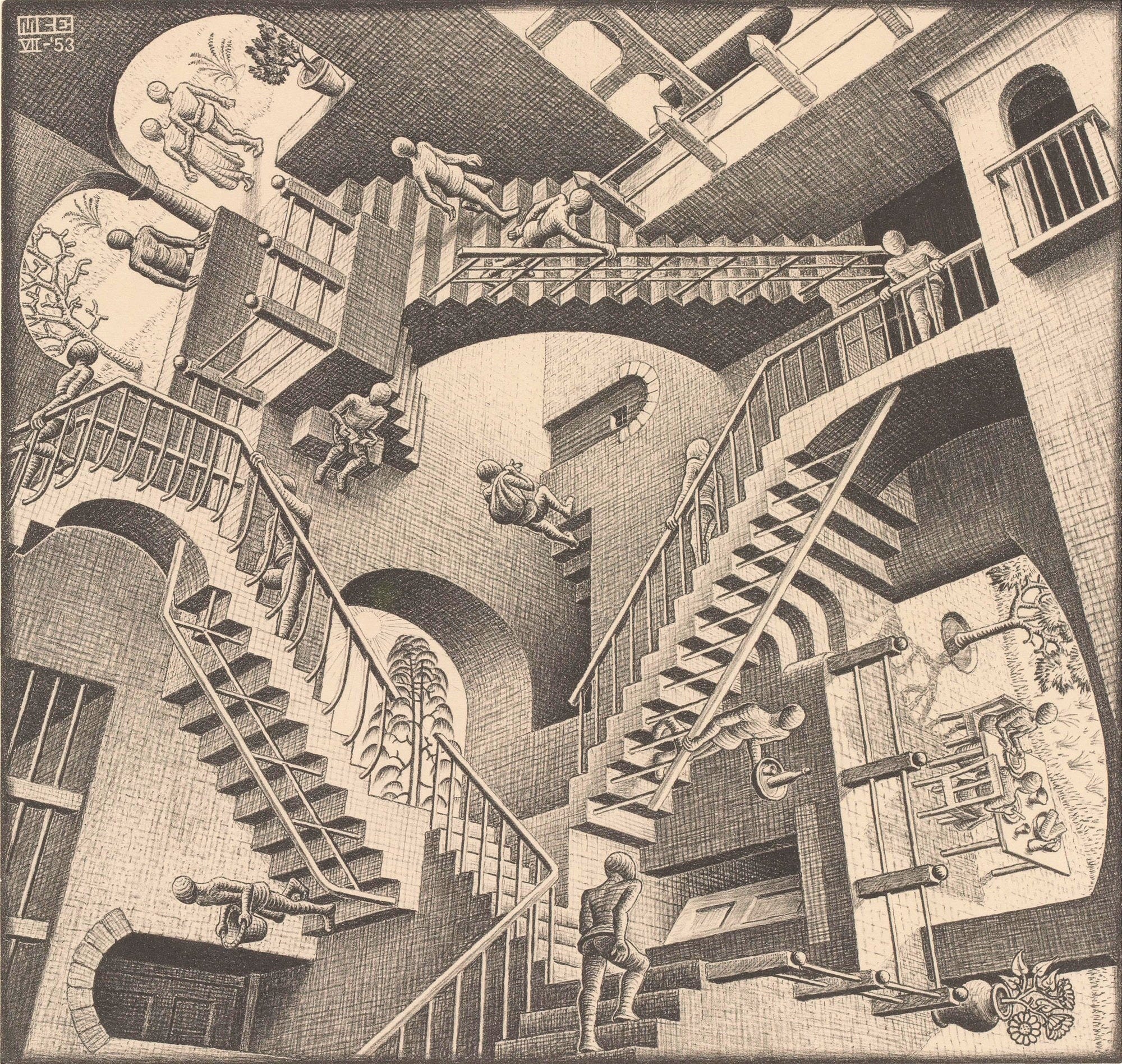
Kenner illustrates this intrinsic tension with an analogy about Peter. Peter is tall when compared to other men, yet tiny when compared to an elephant. Peter thus embodies a paradox: “He is both tall and short at the same time.” You can ignore this paradox by leaving the “elephant out of it and restrict your consideration to mankind, you can call Peter tall without ambiguity” (43). However, if you include both mankind and elephants in your conceptual frame, you must speak analogically, and therefore paradoxically. Metaphysical paradox arises when we expand the frame to include more being. As long as Peter and the elephant are both included, he will be simultaneously tall and short, and this paradox is only surprising “to the reader who cannot see the elephant” (44). Metaphysical paradox, then, emerges when one refuses to artificially narrow the frame of reality; in other words, when one insists on seeing the whole.
Kenner’s concept of aesthetic paradox arises as the third term in his triadic account of Chestertonian paradox, distinct from both rhetorical/verbal and metaphysical forms. If, according to Kenner, verbal paradox hinges upon the mutability of words and metaphysical paradox upon the intrinsic complexity of being, aesthetic paradox is generated by their union during the process of poetic creation. The literary artist, Kenner writes, “moves directly from things to words, and consummates their marriage,” and in that marriage produces “a third kind of paradox, the aesthetic: a resolution of the tensions within things and the tensions within language into a third kind of tension from which art takes its vitality” (17). In Kenner’s account, Chesterton’s aesthetic paradox goes beyond clever wordplay or philosophical necessity, emerging from the tension between reality and language’s attempt to capture it faithfully. Rather than dissolving the verbal play or the metaphysical strain, it integrates both, preserving the full complexity of language’s mutability and reality’s intractable being, without collapsing them into a facile synthesis. In short, aesthetic paradox formalizes tension, making the literary work the site of a sustained dynamic equilibrium between language and being.
ii. The Analogy of Being
If aesthetic paradox formalizes the tension between language and reality within the literary work, Kenner next explains why such tension is unavoidable. In Chapter III of Paradox in Chesterton, he explicitly grounds his reading of Chestertonian paradox in Thomistic metaphysics, asserting that “analogy runs like a thread through the whole work of St. Thomas, as paradox interpenetrates every word of Chesterton’s” (24). He clarifies the relationship between the two succinctly: “analogy has to do with comparison, as paradox has to do with contradiction,” since “putting things side by side is a necessary preliminary to having them clash” (25). Kenner quotes Chesterton on this basic ontological paradox:
“The fact of two things being different implies that they are similar. The hare and the tortoise may differ in the quality of swiftness, but they must agree in the quality of motion. The swiftest hare cannot be swifter than an isosceles triangle or the idea of pinkness. When we say the hare moves faster, we say that the tortoise moves. And when we say of a thing that it moves, we say, without need of other words, that there are things that do not move. And even in the act of saying that things change, we say that there is something unchangeable.”7
The decisive claim follows: “The trouble… lies in reality itself,” for “being is intrinsically analogical” (27). Here, Kenner invokes Aquinas’s doctrine that names predicated of God and creatures are analogical rather than univocal or equivocal (Summa Theologiae I, q. 13). Thus, when Kenner observes that “Man is said to be good; similarly, God is said to be good. It is plainly folly, however, to say that man is therefore as good as God” (ibid), he rehearses Aquinas’s account of proportional predication. God is Goodness itself; things share in that goodness, and hence only possess a limited portion of the transcendent Good. Moreover, his claim that “Everything that is exercises the act of existence in common with everything else… [yet] all things are wonderfully different” (30) depends upon the Thomistic distinction between essence, what and how a thing is, and actus essendi, its act of existence.
To clarify, for Aquinas, to participate means to have something in a partial, limited, or received way, rather than a full or essential way. Hence, God is Good by His very essence, while all created things are good insofar as they share in that supreme goodness. But only in the limited way in which their particular, creaturely essences allow them to participate in the Good. Kenner’s formulation that the “grass exists grassily, the cloud cloudily; they both are, and they are both different, according to the way in which they are” transposes this doctrine of participated being into a Chestertonian idiom (ibid). Aquinas thus provides not mere background but the metaphysical framework that renders Chesterton’s paradoxes intelligible. Paradox arises because being itself is participatory and proportioned, and language strains to express that proportion.8
Kenner’s deployment of Thomistic analogy in Chapter III becomes the interpretive key for the remainder of the book. Having established that “analogy explains, paradox describes; they explain and describe the same reality” (26), he proceeds to show how Chesterton’s rhetoric embodies this ontological structure in the domains of language (“The Word”), metaphysics (“The World”), and aesthetics (“The Word and the World”). The claim that “a knowledge of the principle of analogy will not of itself confer an understanding of metaphysics, but only of the machinery of metaphysical analysis” (26) elucidates Kenner’s method. Analogy provides the structure, while paradox provides its literary manifestation. Metaphysical paradox exists independently of artistic expression, and aesthetic paradox is what happens when an artist consciously structures a work to preserve and formalize that ontological tension.
On this account, Chesterton is a contemplative realist who intuits being analogically, and whose paradoxes formalize that intuition within language. This reading aligns with Aquinas’s definition of truth as the conformity of intellect and thing (adaequatio rei et intellectus) and his insistence that knowledge is proportioned to the mode of the knower.9 Kenner’s larger argument thus mirrors Thomistic procedure itself, wherein apparent contradictions are not eliminated but situated within a hierarchy of participation. Chesterton’s affirmations of unity in diversity, and his child-like wonderment before existence, are therefore not rhetorical extravagances but artistic enactments of analogical being. In this light, aesthetic paradox appears as metaphysical realism in literary form, expressing within art the participatory unity and ordered diversity that Thomism locates at the heart of creation.
B. Drollinger: Paradox as Psychagogy
Frank Drollinger presents his essay as a practical demonstration of the “sanity” Chesterton achieved by refusing the modern captivity of thought to abstractions. For Chesterton, the intellectual decadence of his age was characterized by abstraction detached from experience and reasoning used to undermine reality. Drollinger defines paradox in Chesterton’s own terms as truth inverted to attract attention, and frames it as a practical instrument that bypasses sterile argument when argument’s premises are already poisoned by morbid rationalization. “Logic is not the foe,” Drollinger writes, “it is the premises that are the foe. Paradoxes challenge premises.”10 His formulation crucially designates paradox as a form of epistemic therapy. According to this account, paradox exposes the hidden axioms by which modern minds have made themselves unable to see goodness, gratitude, or created order as intellectually credible. For Drollinger, Chestertonian paradox thus becomes a tool for healing the wounded modern mind.
This therapeutic focus aligns Drollinger’s interpretation with the ancient discipline of psychagogy, the “guiding of the soul,” which understood philosophy as a form of medicine for the troubled psyche. Classical philosophers frequently compared their work to that of physicians. Just as doctors diagnosed bodily ailments and prescribed remedies, philosophers sought to heal moral and intellectual disorders by exposing false beliefs and cultivating sound judgment. Because such disorders involved not only mistaken reasoning but also disordered emotions and habits, philosophical therapy relied heavily upon rhetoric and persuasive speech. Stories, analogies, exhortations, and carefully constructed arguments were employed to reshape emotional responses, clarify confused thinking, and gradually guide the listener toward a healthier vision of reality.11
i. Augustine and the Cure of Souls
This therapeutic conception of discourse remained influential in the late Roman world, where philosophical and rhetorical education were closely intertwined. The emergence of Christianity did not abolish this tradition but transformed it. Many early Christian leaders, including Augustine, Basil of Caesarea, and Gregory Nazianzen, were trained in classical rhetoric before entering the episcopate, and they carried this traditionally psychagogic training into their understanding of preaching and pastoral care.12 As Paul Kolbet observes, Christian preaching therefore developed a distinctly therapeutic dimension: sermons were not merely doctrinal expositions but attempts to reshape the desires and emotional dispositions of believers.13 Augustine of Hippo provides the most influential example of this transformation. Having worked as a professional teacher of rhetoric prior to his conversion, Augustine understood the Christian teacher’s task not simply as the transmission of information but as the guidance of souls through speech adapted to the psychological condition of the listener.
In Augustine’s pastoral practice, this inheritance developed into the Christian doctrine of cura animarum, the “care of souls.” The Latin word cura itself carried both administrative and medical meanings, and these senses converged in the pastoral office. Bishops and priests were responsible not only for governing the church but also for healing the spiritual ailments of their communities. Augustine, therefore, frequently described the Christian minister as a medicus spiritalis, a physician of the soul. Yet he also modified the classical model of philosophical therapy in a crucial respect. Whereas ancient philosophers often believed that tranquility could be achieved through rational self-discipline alone, Augustine argued that the deepest human disorder lies in disordered love and cannot be healed by unaided reason. True healing requires divine grace. In this framework, rhetoric and philosophical reasoning remain essential instruments, but they function as medicinal tools within God’s larger saving work. Kolbet describes how Augustine viewed the preaching of the gospel as part of God’s own psychagogic activity, an attempt to draw human beings toward divine love. In this vision, rhetoric and philosophical reasoning remain important tools, but they function as medicinal instruments of divine grace rather than autonomous therapeutic techniques of self-mastery.
ii. Chesterton: Spiritual Doctor
Even though Drollinger’s article “Paradox and Sanity” does not directly invoke the ancient tradition of psychagogy or the Christian cura animarum, his account of paradox fits seamlessly into this framework of soul-guiding therapy. According to Drollinger, paradox functions principally as a therapeutic shock. It loosens captive premises and thereby reorients perception, imagination, and desire toward a healthier “vision of the whole.” Drollinger wholeheartedly adopts Chesterton’s definition of paradox as truth standing on its head to attract attention, not as a merely self-canceling contradiction. For Drollinger, the aim is therapeutic rather than clever; it retrains attention through defamiliarization. By forcing the mind to stop running on predetermined cognitive tracks, paradox makes the mundane appear strange and therefore freshly analyzable. It targets distorting premises rather than logic itself, freeing reason from the stultifying abstractions that modern thought has mistaken for reality.
This strategic intervention mirrors the moves of ancient psychagogic therapies. Rather than pursuing better deduction within a flawed framework, psychagogy seeks a fundamental reevaluation of first principles and judgments. The ancient Stoic psychagogue Epictetus famously traced the ailments of the soul to erroneous and often unexamined assessments: “It is not things [pragmata] that disturb people, but their judgments [dogmata = doctrines] about things.”14 Similarly, Drollinger frames Chestertonian paradoxes as provocations against the intransigent dogmas of the age that demand the reader’s active response. Paradox does not deliver a ready-made solution. Instead, it structures a prompting of the mind, inducing an interior movement toward reassessment, imaginative recombination, and a metanoia-like reorientation of the soul.
In this respect, Drollinger’s analysis of Chesterton’s technique recalls Plato’s analogy of the Cave, where prisoners mistake shadows for reality and must be turned toward the light to glimpse the truth. According to Drollinger, this Platonic parallel is exemplified in The Man Who Was Thursday in the protagonist Gabriel Syme’s climactic epiphany:
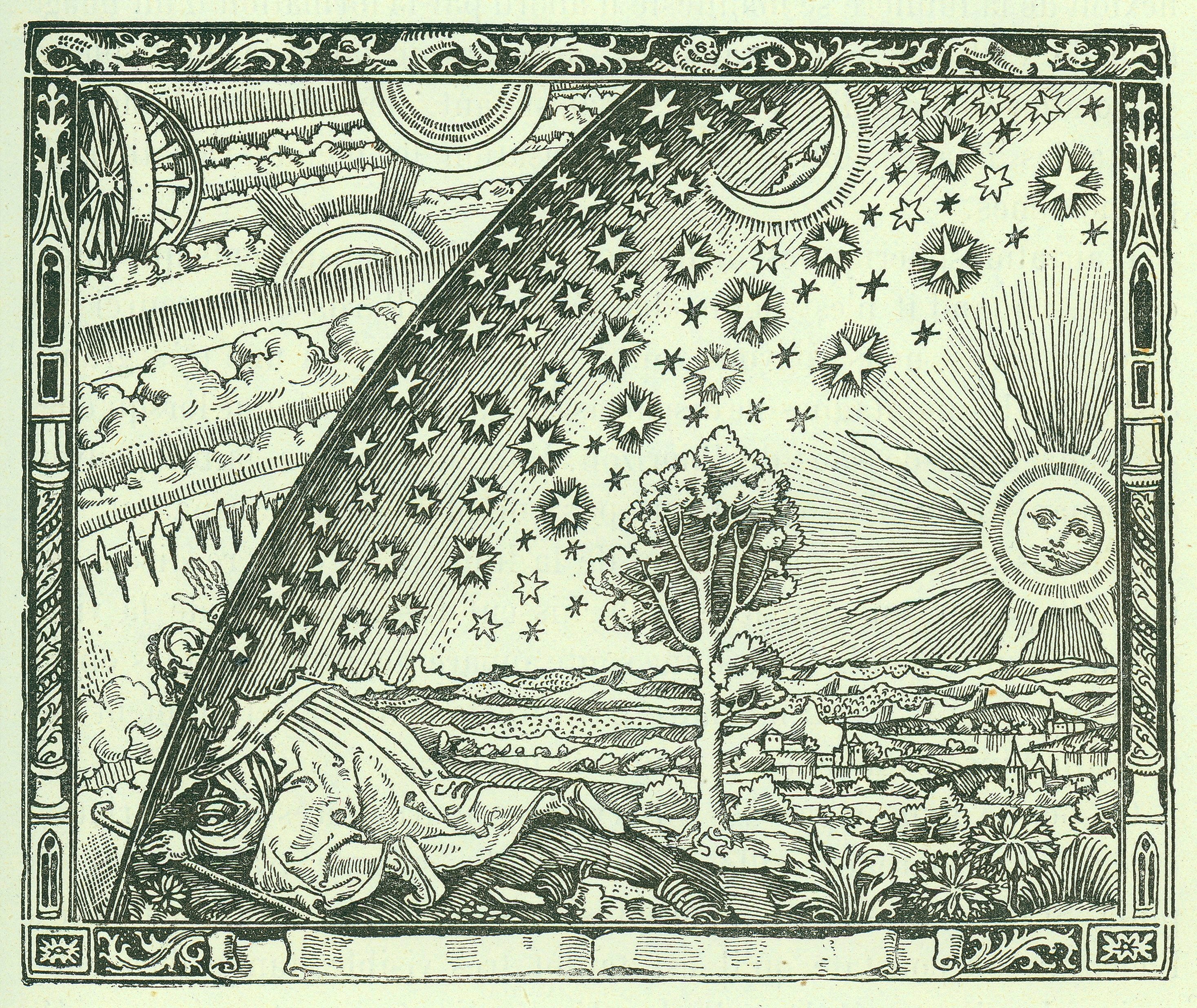
“Listen to me,” cried Syme with extraordinary emphasis. “Shall I tell you the secret of the whole world? It is that we have only known the back of the world. We see everything from behind, and it looks brutal. That is not a tree, but the back of a tree. That is not a cloud, but the back of a cloud. Cannot you see that everything is stooping and hiding a face? If we could only get round in front—”15
In Drollinger’s reading, Chesterton, much like Plato, “shows us as imprisoned in a view of the world in which we only see its shadows.” It is only when we realize this condition of our existence, and lead from the cave into the daylight above it, that “we can see more of the truth of the world.” (126)
Despite his predominantly therapeutic focus, Drollinger’s culminating emphasis is explicitly theological. He casts Chesterton’s employment of paradox as an instrument in a kind of Augustinian cura animarum. On this account, the novel’s final “impossibly good news” at the end of the nightmare, revealed immediately after Sunday’s enigmatic reference to the “cup” of suffering from which he has drunk, points toward the Incarnation. Paradox thus becomes not merely a reset for the mind but a passage into a Christian structure of meaning, where seemingly paradoxical contradictions, such as suffering and joy, judgment and mercy, sacrifice and redemption, can all be held together without denial or facile resolution. In an era still captive to abstraction and despair, Chesterton, according to Drollinger’s lens, emerges as a spiritual doctor, guiding souls toward sanity by restoring paradoxical wonder at the created order and its hidden, gracious face.
We should also note that there are clear connections between this therapeutic reading of the novel and biographical elements from Chesterton’s own life, which indicate that he viewed the composition of The Man Who Was Thursday as a psychagogic form of cura animarum. Chesterton’s own retrospective account in the Autobiography makes explicit that the novel is not merely a fantastical lark but a symbolic rendering of a profound psychological and metaphysical crisis. In Chapter IV, “How to Be a Lunatic,” he describes a period of youthful “moral anarchy within” in which his imagination became pathological, marked by “an overpowering impulse to record or draw horrible ideas… plunging deeper and deeper as in a blind spiritual suicide.”16 This inward collapse was accompanied by what he later calls a “metaphysical nightmare of negations about mind and matter” (101), a formulation that directly anticipates the epistemological instability and dreamlike unreality structuring Thursday. Crucially, Chesterton insists that this condition was not merely speculative but existential, since he had “dug quite low enough to discover the devil” (93), thereby affirming the objective reality of evil rather than dissolving it into relativism. The novel’s grotesque anarchists and its ambiguous figure of Sunday thus emerge from a mind that had genuinely confronted chaos as both moral and ontological threat. Yet the Autobiography also records the decisive turn that governs the narrative arc of Thursday: a “strong inward impulse to revolt; to dislodge this incubus or throw off this nightmare,” leading to an elementary but decisive affirmation that “anything was magnificent as compared with nothing” (93-94). This journey from nightmarish solipsism to existential affirmation is explicitly linked to the novel itself, which Chesterton describes as “a nightmare… of things… as they seemed to the young half-pessimist” designed so as to begin “with the picture of the world at its worst” and move toward the recognition “that the picture was not so black as it was already painted” (102).
C. Nichols: Paradox as Mystagogy
If Kenner interprets Chesterton’s paradox primarily through the Thomistic analogy of being, and Drollinger largely understands it as a therapeutic strategy for restoring sanity to modern minds, Fr. Aidan Nichols further positions Chestertonian paradox within the structure of Christian theology itself. For Nichols, paradox is not merely a literary technique nor even only a metaphysical insight into the analogical character of being. Rather, paradox corresponds to the way reality is disclosed in Christian revelation. Because creation, redemption, and the life of God all involve relations that cannot be reduced to simple conceptual oppositions, the language that faithfully describes them must often take paradoxical form. In effect, for Nichols, paradox functions as mystagogy, a process of leading nascent believers into the Christian mysteries, an initiation into God’s own self-disclosure.
Nichols, therefore, distinguishes between two orders of doctrinal paradox in Chesterton’s thought. The first concerns paradoxes located within the structure of the created world itself, especially those pertaining to human existence. These belong to what Nichols calls the order of metaphysical realism. Here, Nichols largely follows Kenner’s Thomistic insights into the analogical, and hence paradoxical, structure of being. The second concerns paradoxes about God and thus about the religious foundation of metaphysical realism. As Nichols writes, “doctrinal paradox may concern the world of things and especially of man, as in metaphysical realism, or it may concern God, the realm of the divine, and so the religious foundation for metaphysical realism” (95).
i. Creation and the Paradox of Being
Nichols first identifies a foundational paradox concerning the relation between being and nothingness. Chesterton repeatedly frames creation in terms of a tension between fullness and contingency. In his study of St. Francis, for instance, Chesterton describes Francis as one who “not only appreciates everything but the nothing of which everything was made” (96). This paradox arises from the Christian doctrine of creatio ex nihilo. As Nichols explains, Chesterton praises not merely the cosmos but the act of creation itself: “When we say that a poet praises the whole creation, we commonly mean only that he praises the whole cosmos. But this sort of poet… does really praise creation, in the sense of the act of creation” (Ibid). As Nichols points out, the philosophical puzzle that “everything is made of nothing” ultimately requires a theological explanation. Creation persists only through the continual gift of divine being. Without that sustaining influx of existence, creatures would lapse back into the nothingness from which they were called.
Nichols next turns to a classical theological paradox regarding the relation between divine transcendence and immanence. Christian doctrine holds these realities together rather than opposing them. Indeed, transcendence is precisely what makes genuine immanence a real possibility. Divine transcendence makes possible divine immanence, since it is only inasmuch as God differs from the world that he can be present to it and in it without transgressing the world’s inherent character as creation. Consequently, knowledge of God involves both distance and encounter. Human understanding may glimpse divine reality without fully grasping it, like Moses viewing the promised land from afar.
ii. Doctrinal Paradoxes: Christology and Trinity
According to Nichols, these tensions reach their fullest expression in Christology, for the Incarnation unites realities that ordinary categories tend to separate. In The Everlasting Man, Chesterton describes the biblical babe in the manger as the paradoxical union of infancy and cosmic sovereignty. The idea of a baby joined to “the unknown strength that sustains the stars” (100). Similarly, as Nichols points out, Chesterton insists upon the Chalcedonian confession that Christ is “both things at once… very man and very God” (ibid).
However, for Nichols, the most fundamental paradox in Chesterton’s thought, as in Christianity, concerns the doctrine of the Trinity. This is the case because the unity of God is not solitary but relational. As Chesterton famously writes in Orthodoxy: “For us Trinitarians… God Himself is a society.”17 Nichols calls this “the unique paradox at the heart of Nicene orthodoxy,” since it preserves both divine unity and personal distinction (101).
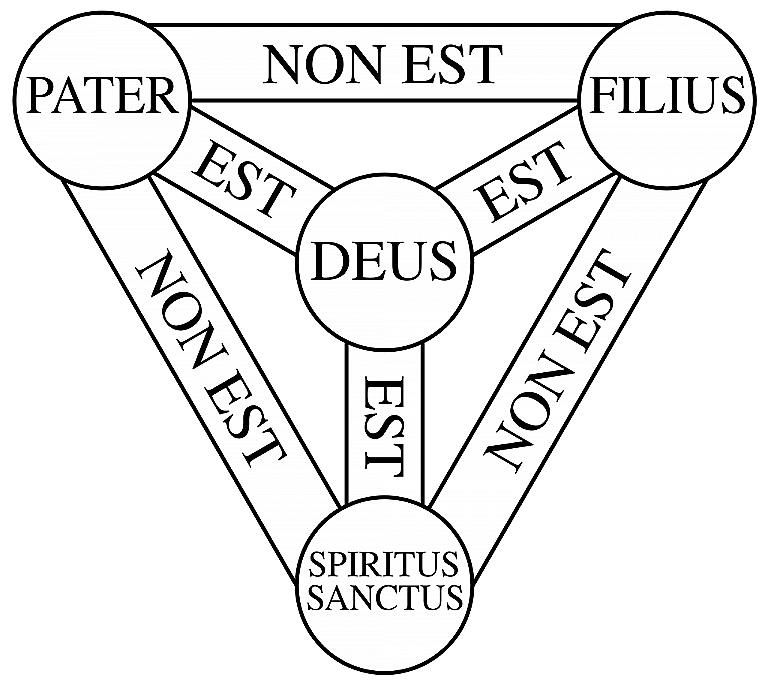
Nichols thus concludes that paradox serves multiple functions in Chesterton’s thought. At the pedagogical level, paradox shocks readers out of intellectual complacency. At the metaphysical level, it reflects the analogical structure of created being. Most fundamentally, however, paradox corresponds to the structure of Christian doctrine itself. Creation from nothing, the tension of fall and grace, the coexistence of transcendence and immanence, and the mysteries of Incarnation and Trinity all require a language capable of holding together truths that ordinary reasoning tends to separate. As Nichols explains, Chesterton sometimes employs paradox merely to challenge received opinion, but at other times his aim is doctrinal “in the strongest sense — namely, to bring people to encounter metaphysical and even more foundationally religious truths in a form which is isomorphic with the realities involved” (ibid). Nichols finds that Chesterton’s technique for exploring doctrine is consistent. A “build-up of argumentation or persuasive discourse is suddenly concentrated in a phrase that shocks” (ibid). And the theological results are equally unfailing:
“The crystallization of the paradox itself, in a sharp formulation of its own, makes the logical impact, bringing together two seemingly contradictory concepts at the heart of their meaning, thus causing the reader to re-evaluate his or her attitude to truth in some respect as a consequence of a new illumination” (ibid).
The Man Who Was Thursday: Paradox in Narrative Form
If Kenner, Drollinger, and Nichols each identify a distinct philosophical and theological function for paradox in Chesterton’s thought, The Man Who Was Thursday may be read as the imaginative site where those functions converge. In the novel, paradox is no longer confined to epigrammatic brilliance or polemical rhetoric; rather, it becomes the governing principle of narrative form itself. Apparent oppositions, whether they be anarchy and law or nightmare and revelation, are not merely asserted but enacted through a sequence of scenes in which both protagonist and reader are repeatedly forced to revise their interpretation of events. The narrative thus stages the very epistemic drama that Chesterton’s paradoxes provoke as it depicts the unsettling possibility that the contradictions of experience conceal a deeper intelligibility rather than dissolving meaning altogether.
In this sense, the novel performs in dramatic form the three interpretive dimensions outlined above. At the level of perception, paradox discloses unsuspected aspects of reality, exemplifying the metaphysical intuition that Kenner identifies at the heart of Chesterton’s analogical thought. At the psychagogic level, paradox functions therapeutically, disrupting the habits of modern skepticism and forcing a curative reconsideration of apparently settled assumptions, much in the manner described by Drollinger. Yet the narrative ultimately pushes on beyond both metaphysical insight and epistemic therapy toward the theological dimension emphasized by Nichols.
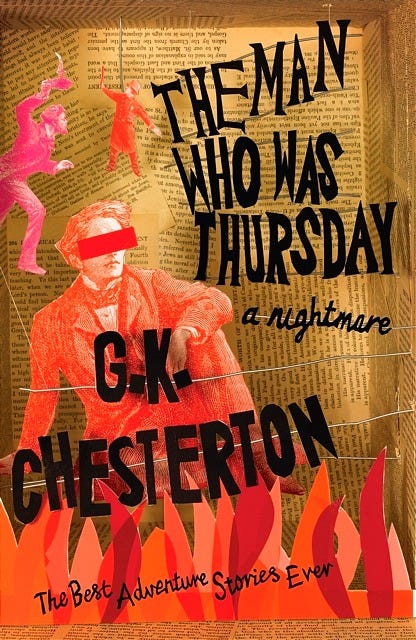
Chesterton’s dramatization of paradox is evident from the novel’s commencement. The narrative begins in a setting that already embodies contradiction, the artistic London suburb of Saffron Park, whose inhabitants live within an atmosphere that Chesterton depicts as simultaneously whimsical and unsettlingly unreal. He describes the place as a community that must be regarded “not as a deception but rather as a dream” (10), where even the people themselves seem more like aesthetic artifacts than ordinary denizens. This opening sense of paradox is deepened by the confrontation between two poets who represent opposing metaphysical visions. Lucian Gregory proclaims the aesthetic of anarchic revolt, insisting that “an artist is identical with an anarchist” (15), since the artist rejects convention and delights in disorder. Gabriel Syme replies with one of Chesterton’s most characteristic reversals. According to Syme, true poetry belongs not to chaos but to order. What appears dull or mechanical, such as the punctuality of a railway timetable, becomes, for Syme, a symbol of human triumph over disorder. “Chaos is dull; because in chaos the train might indeed go anywhere,” but in Syme’s estimation, “man is a magician, and his whole magic is in this, that he does say Victoria, and lo! it is Victoria” (17).
i. The Nightmare of Anarchy
This exchange in effect establishes the central paradox that will animate the rest of the novel. What modern culture celebrates as freedom appears, on Chesterton’s account, as chaos. And what modern culture dismisses as convention appears as the true locus of creativity and wonder. The novel’s unfolding “nightmare” will gradually reveal that beneath this apparent opposition between disorder and authority lies a deeper pattern of paradox in which the seeming enemies of order turn out to be its secret defenders. Syme’s witty retort epigramatically argues that in a contingent world, the successful implementation of order becomes a triumph of intelligence over chaos. What Gregory dismisses as mechanical regularity is interpreted by Syme as the victory of rational form over anarchic disorder. It encapsulates the metaphysical perception Hugh Kenner attributes to Chesterton’s paradox that reality is intelligible, though that intelligibility is often hidden within the ordinary. At the same time, the episode performs the pedagogical function Frank Drollinger describes. By presenting the railway timetable, perhaps the most mundane of modern institutions, as an object of poetic admiration, Chesterton shocks the reader out of habitually clichéd perceptions and restores a sense of wonder in the everyday. The speech also foreshadows the theological element emphasized by Aidan Nichols. If order itself appears wondrous, it hints that immanent reality is shaped by a transcendentally rational Logos deeper than any purely human convention. Thus, what begins as an aesthetic debate becomes the first indication that the world’s apparent chaos may conceal a providential patterning.
The paradox articulated in Syme’s defense of order soon becomes dramatically embodied in the subterranean meeting of the Anarchist Council. What first appeared to be a conventional conflict between defenders of law and apostles of chaos is inverted when Syme reveals that he himself is a police detective infiltrating the anarchist movement. In the startling confession that follows Gregory’s intended election as the figure of Thursday, Syme is revealed as a police detective. Yet the paradox immediately deepens, for the revelation does not resolve the tension between order and disorder but intensifies it. Gregory cannot expose Syme without betraying himself, and Syme cannot expose Gregory without violating his oath. As Syme observes, the result is “a lonely intellectual duel, my head against yours” (47). This logic of disguise soon extends to the entire structure of the narrative. One by one, the members of the anarchist council are exposed as undercover detectives. What initially appears as a conspiracy devoted to destruction gradually discloses itself as a strange coalition of agents secretly defending order. The plot, therefore, becomes paradoxical in its very architecture, as the supposed enemies of law turn out to be its hidden guardians.
This episode prepares the reader to recognise the theological dimension identified by Nichols by means of the increasingly enigmatic figure of Sunday. Throughout the narrative, Sunday appears as the mysterious and terrifying President of the Central Anarchist Council, a figure whose immense physical presence and inscrutable authority seem to embody chaos itself. The effect is deliberately unstable. Sunday appears larger than the world around him, yet the meaning of that excess remains unclear. Throughout the course of the story, Sunday functions as the focal point of the novel’s paradoxical structure. The detectives pursue him through London and beyond, yet each attempt to confront him produces new revelations about themselves rather than about him. The pursuit structure of the plot thus reinforces his elusive authority. Sunday appears at once omnipresent and inaccessible, both the object of the chase and the quarry that seems always to remain beyond capture.
This interpretive instability is crucial to the novel’s deeper meaning. Sunday cannot be reduced to a straightforward allegorical symbol representing either tyranny or providence. Instead, he occupies an ambiguous position between these two possibilities. The detectives suspect him of orchestrating a conspiracy of destruction, yet their discoveries repeatedly undermine that suspicion without entirely dispelling it. Sunday remains at once terrifying and strangely magnanimous, a paradoxical figure whose significance exceeds the categories through which the characters initially attempt to understand him.
The story’s climactic revelations gradually confirm that Sunday cannot be simply reduced to either of these roles. Instead, he becomes the focal point of the novel’s deepest paradox. The apparent author of disorder may in fact be the hidden guarantor of order. In one of the novel’s most haunting moments, Sunday confronts Syme with a question that exposes the deeper mystery of the entire adventure: “Can ye drink of the cup that I drink of?” (329).
ii. Paradox as Theodicy
When Sunday confronts Syme with this haunting question, the evident biblical allusion reframes the narrative in unmistakably theological terms and raises what may be the most insoluble of all doctrinal paradoxes: the problem of evil. Mark Knight has argued that The Man Who Was Thursday represents the literary culmination of Chesterton’s reflections on theodicy.18 According to Knight, while Chesterton ultimately grounds the problem of evil in human free will, he nonetheless refuses to give a systematic account of suffering. Rather, Chesterton’s “nightmare” dramatizes the complex ramifications of free will while simultaneously exposing the limits of rational justification for the presence of evil in God’s creation. In this regard, the novel’s structure echoes the biblical Book of Job. Both narratives pose the question of why the righteous suffer and respond not with a theoretical resolution but with an unsettling encounter with divine mystery.
In Knight’s reading, as the story unfolds, Syme gradually comes to realize that the perils and iniquities he encounters arise from the freedom granted to mankind, reflecting Chesterton’s own conviction that moral evil originates in the perversion of the human will. Yet, significantly, this recognition does not fully resolve the problem. In place of any easy resolution, the story moves into a realm of paradox where reason gives way to wonder, much in the way that God’s answer to Job from the whirlwind places suffering at the heart of the incomprehensible grandeur and terror of creation, rather than abolishing it. In Chesterton’s vision, the paradox of freedom is unavoidable. The same liberty that makes evil possible is also the condition for the possibility of courage, love, and joy. For what Chesterton describes as the inherent connection between freedom and adventure, a “ world where men act freely and live with the consequences of their actions” (381). According to Knight, the novel thus implies that a world capable of tragedy is also the only world capable of meaningful goodness.
The Chestertonian paradox identified by Knight intensifies in the climactic encounter between Syme and Sunday. When Syme protests the shock and confusion endured by the detectives, Sunday responds with an unexpected question regarding his cup. The clear reference to Matthew 20:22 and Mark 10:38, wherein Jesus asks his followers if they would be able to partake of the suffering and death that he was to endure for the atonement of sins, recasts Sunday in an unmistakably Christological manner. The figure who has appeared throughout the novel as the terrifying architect of chaos now hints that he himself bears a deeper burden of potentially soteriological suffering. Knight observes that Chesterton repeatedly returns to the model of Job in interpreting suffering, yet here the novel also gestures toward a more specifically Christian answer. If Job reveals a God whose purposes exceed human comprehension, the Gospel introduces the possibility that God responds to suffering not merely by explaining it but by sharing it. The paradox suggested in Sunday’s words is therefore profound. The apparent ruler of the nightmare may also be its hidden fellow sufferer.
iii. Chesterton’s Paradoxical Cry of Dereliction
Chesterton’s own reflections on the Passion illuminate this paradox regarding suffering. In Orthodoxy, he paradoxically suggests that Christ’s cry of dereliction from the cross, “My God, my God, why have you forsaken me?” (Eloi, Eloi, lema sabachthani?), recorded in both Matthew 27:46 and Mark 15:34, reveals something unprecedented in religious history: the possibility that God at that instant appeared to be an atheist.
“Lastly, this truth is yet again true in the case of the common modern attempts to diminish or to explain away the divinity of Christ. The thing may be true or not; that I shall deal with before I end. But if the divinity is true it is certainly terribly revolutionary. That a good man may have his back to the wall is no more than we knew already; but that God could have his back to the wall is a boast for all insurgents for ever. Christianity is the only religion on earth that has felt that omnipotence made God incomplete. Christianity alone has felt that God, to be wholly God, must have been a rebel as well as a king. Alone of all creeds, Christianity has added courage to the virtues of the Creator. For the only courage worth calling courage must necessarily mean that the soul passes a breaking point—and does not break. In this indeed I approach a matter more dark and awful than it is easy to discuss; and I apologize in advance if any of my phrases fall wrong or seem irreverent touching a matter which the greatest saints and thinkers have justly feared to approach. But in that terrific tale of the Passion there is a distinct emotional suggestion that the author of all things (in some unthinkable way) went not only through agony, but through doubt. It is written, ‘Thou shalt not tempt the Lord thy God.’ No; but the Lord thy God may tempt Himself; and it seems as if this was what happened in Gethsemane. In a garden Satan tempted man: and in a garden God tempted God. He passed in some superhuman manner through our human horror of pessimism. When the world shook and the sun was wiped out of heaven, it was not at the crucifixion, but at the cry from the cross: the cry which confessed that God was forsaken of God. And now let the revolutionists choose a creed from all the creeds and a god from all the gods of the world, carefully weighing all the gods of inevitable recurrence and of unalterable power. They will not find another god who has himself been in revolt. Nay, (the matter grows too difficult for human speech,) but let the atheists themselves choose a god. They will find only one divinity who ever uttered their isolation; only one religion in which God seemed for an instant to be an atheist” (253-255).
For Chesterton, this charge of divine atheism expresses the scandalous Christian claim that the Creator at this precise moment endures the extremity of human abandonment. It is this unutterably paradoxical feature of Christianity that later thinkers have found both compelling and controversial. For example, the neo-Marxist philosopher Slavoj Žižek interprets Chesterton’s account of Christ’s dereliction as evidence that Christianity discloses an enfleshed God who undergoes radical self-division upon entering Creation, thereby abandoning the role of transcendent guarantor and revealing reality as fundamentally devoid of any metaphysical finality. Žižek then asks whether contemporary Christians fully understand the effects of the death of the Son as described by Chesterton, or whether they prefer the “comfortable image” of a benevolent transcendent God that continues to figuratively sit above the world. In other words, Chesterton becomes for Žižek a test case for the difference between official Christian teaching and the more terrifying, kenotic logic that Žižek thinks Christianity actually reveals. In Žižek’s reading of Chesterton’s paradox, Christianity
“enacts the reflexive reversal of atheist doubt into God himself. In his ‘Father, why have you forsaken me?’, Christ himself commits what is for a Christian the ultimate sin: he wavers in his Faith. While, in all other religions, there are people who do not believe in God, only in Christianity does God not believe in himself.”19
For Chesterton, the cry of dereliction is the key outward scene in a darksome and awe-inspiring drama that takes place primarily within God Himself. In The Everlasting Man, he writes:
“There were solitudes beyond where none shall follow. There were secrets in the inmost and invisible part of that drama that have no symbol in speech; or in any severance of a man from men. Nor is it easy for any words less stark and singleminded than those of the naked narrative even to hint at the horror of exaltation that lifted itself above the hill. Endless expositions have not come to the end of it, or even to the beginning. And if there be any sound that can produce a silence, we may surely be silent about the end and the extremity; when a cry was driven out of that darkness in words dreadfully distinct and dreadfully unintelligible, which man shall never understand in all the eternity they have purchased for him; and for one annihilating instant an abyss that is not for our thoughts had opened even in the unity of the absolute; and God had been forsaken of God.”20
Similarly, the Catholic theologian Hans Urs von Balthasar interpreted Christ’s consciousness on the Cross within the framework of a Theo-Dramatic theology, in which salvation history is also understood as a dramatic inner-Trinitarian encounter between divine and human freedom that culminates in the Passion. Within this drama, the cry of dereliction marks the climactic moment in which the incarnate Son’s earthly mission reaches its most radical form, an obedient surrender to the heavenly Father amidst a torturous personal experience of abandonment. Balthasar controversially claimed that Christ’s human consciousness is wholly determined by his mission-consciousness, the awareness of being sent by the Father. Yet, to carry that mission to its ultimate completion on the cross, Balthasar argued that the Son must descend into the deepest possible participation in the sinner’s distance from God. A descent which must include an experience of total desertion by the Father, characterized by a lack of conscious knowledge of the Father’s love brought about by a “veiling’ of the beatific vision. As a result of this occlusion, Jesus undergoes the completely hopeless resistance of sinners to God. To use Chesterton’s own language, here the second Person of the Trinity has effectively become an “atheist,” he is utterly God-forsaken. Balthasar’s dramatic account of the Son’s dereliction seemingly enacts a particularly bleak Chestertonian paradox. The highest obedience, as embodied by the crucified Christ, is obedience without conscious knowledge or even hope.21
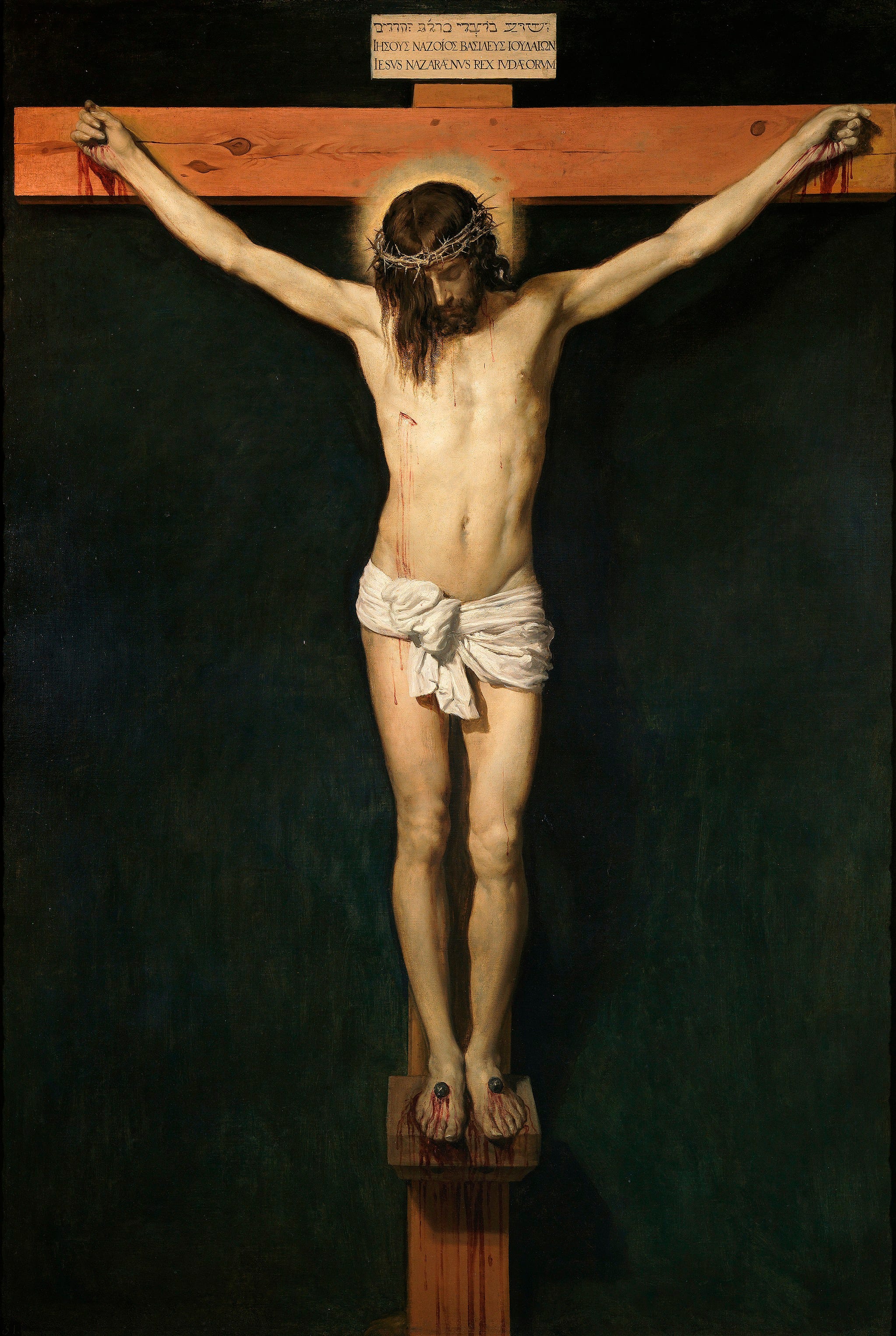
However, a more classical interpretation of Chesterton’s insight clarifies the paradox without dissolving it. Fr. Thomas Joseph White, O.P., argues that Christ’s cry of abandonment cannot signify hopelessness or separation from God in any strict sense, since such conditions would contradict traditional Catholic teachings about Christ’s divine sonship and beatific knowledge. Instead, the cry expresses what White indicates as a suffering hope; a paradoxical state in which agony and expectation coexist.22 Christ experiences the extremity of human desolation while simultaneously entrusting himself to the Father’s redemptive purpose. Read in this light, Chesterton’s language about a God who “seemed… to be an atheist” must be understood analogically rather than literally. It demonstrates what Kenner identified as the Chestertonian aesthetic paradox’s function in formalizing tensions between being and language. Here, Chesterton’s aesthetic paradox points to the unfathomable mystery of iniquity and divine redemption. On this account, Chesterton echoes the Christian claim that God does not become alienated from himself, but that in Christ God enters the depths of human suffering without ceasing to be the source of hope. Christ’s cry of dereliction then should not be read as despondency, divine rupture, or loss of the beatific vision, but as a prayer of suffering desire shaped by hope. As White explains, the cry “cannot be interpreted as either a cry of despair or of spiritual separation from God,” but, instead, “ought to be understood theologically as a prayer of desire” ordered to redemption (557). In Nichols’s terms, The Man Who Was Thursday as a whole thus functions as a form of mystagogic reading regarding the Son’s dereliction, leading the reader through the apparent absurdity of suffering toward the paradoxical revelation of a God, as personified by the character of Sunday, who both governs and participates in the drama of creation.
In this way, the novel gathers together the three dimensions of paradox outlined by Kenner, Drollinger, and Nichols. Thus, in Chesterton’s narrative, paradox functions first as a mode of perception, enabling the reader to see order where chaos initially appeared to reign, simultaneously embracing the tensions within being, but without resolving them into a simplistic synthesis. It functions second as a psychological shock that disrupts entrenched assumptions about the nature of reality, while also serving as a spiritual cura animarum for the troubled soul, guiding readers deeper into the mystery of God’s sacrificial love. Finally, it gestures toward a theological vision in which the contradictions of experience are located within a drama of creation, freedom, and providence. This theological horizon clarifies the overall meaning of Sunday in The Man Who Was Thursday. Though he first appears as the monstrous president of the anarchists, the gradual revelations of the narrative suggest that the apparent author of chaos may in fact be the hidden guarantor of order. Sunday’s question about “the cup” transforms the novel’s detective story intrigue into a meditation on divine suffering. What initially appears as a nightmare of conspiracy becomes an imaginative exploration of the paradox at the heart of Christian theodicy. The ruler of the world is also the suffering servant who bears and redeems its pain. Chesterton refuses to resolve the paradox by explaining suffering away. Instead, he frames it within a symbolic vision of creation in which misery, freedom, and divine authority remain bound together in a drama whose full meaning exceeds purely human reasoning.
The result is a vision in which paradox does not dissolve meaning but helps disclose it. The world Syme inhabits proves neither absurd nor transparently rational. It is instead a world in which truth appears disguised, order hides within apparent disorder, and divine meaning reveals itself precisely through the contradictions that at first seem to threaten it. In this sense, Chesterton’s paradox is not a clever inversion of language but a disciplined way of seeing. It is a recognition that the true nature of reality may be most fully apprehended when it is allowed to appear, as he once put it, “standing on its head.”
“Mr. Pond’s paradoxes were of a very peculiar kind. They were indeed paradoxical defiances even of the law of paradox. Paradox has been defined as ‘Truth standing on her head to get attention.’ Paradox has been defended; on the ground that so many fashionable fallacies still stand firmly on their feet, because they have no heads to stand on.” G.K. Chesterton, The Paradoxes of Mr. Pond (London: Cassell and Company, 1937), 71.
Aidan Nichols, O.P., G.K. Chesterton, Theologian (Manchester, N.H.: Sophia Institute Press, 2009). All further citations will be given parenthetically in the body of the essay.
Ibid, 87.
Hugh Kenner, Paradox in Chesterton (London: Sheed & Ward, 1948), 1. All further citations will be given parenthetically in the body of the essay.
G.K. Chesterton, St. Thomas Aquinas (New York: Sheed & Ward, 1933), 204-5
G.K. Chesterton, “On Evil Euphemisms,” in Come to Think of It: A Book of Essays (London: Methuen & Co. Ltd, 1932), 109; Quoted in Kenner, 16.
G.K. Chesterton, Heretics (London: John Lane: The Bodley Head, 1910 ), 82.
The primary Thomistic loci for Kenner’s arguments are as follows. Analogy between univocity and equivocity: Summa Theologiae I, q. 13, a. 5–6; Summa Contra Gentiles I, c. 34. Many participate in the One: In Metaph. IV; SCG I, c. 32. Participation in being: ST I, q. 44–45.
“Cognitum est in cognoscente secundum modum cognoscentis.” See Summa Theologiae I, q.12, a.4 and I, q.14, a.1, ad 3.
Frank M. Drollinger, “Paradox and Sanity in The Man Who Was Thursday,” The Chesterton Review 31:1-2 (Spring/Summer 2005): 121-128; here at 122. All further citations given parenthetically.
See Martha C. Nussbaum, The Therapy of Desire: Theory and Practice in Hellenistic Ethics (Princeton: Princeton University Press, 1994); Julia Annas, “Philosophical Therapy, Ancient and Modern,” in Bioethics: Ancient Themes in Contemporary Issues, ed. M.G. Kuczewski and R.Polansky (Cambridge, MA: MIT Press, 2000), 109-127.
See Richard Sorabji, Emotion and Peace of Mind: From Stoic Agitation to Christian Temptation (Oxford: Oxford University Press, 2000).
Paul R. Kolbet, Augustine and the Cure of Souls: Revising a Classical Ideal (Notre Dame, IN: University of Notre Dame Press, 2010)
Epictetus, Enchiridion, 5, in Epictetus: Discourses and Selected Writings, trans. R. Dobbin (London: Penguin Classics, 2008), 223. Οὐ τὰ πράγματα ταράσσει τοὺς ἀνθρώπους, ἀλλὰ τὰ περὶ τῶν πραγμάτων δόγματα.
G.K. Chesterton, The Man Who Was Thursday (Bristol: J. W. Arrowsmith, 1908), 304. All further citations to this edition will be given parenthetically in the body of the essay.
G.K. Chesterton, Autobiography (London: Hutchinson & Co., 1937), 93. All further citations given parenthetically.
G.K. Chesterton, Orthodoxy (London: John Lane: The Bodley Head, 1909), 249.
Mark Knight, “Chesterton and the Problem of Evil,” Literature and Theology 14:4 (December 2000): 373-384. All further citations given parenthetically.
Slavoj Žižek, John Milbank, The Monstrosity of Christ: Paradox or Dialectic?, ed. C. Davis (Cambridge, MA: MIT Press, 2009), 48-49.
G.K. Chesterton, The Everlasting Man (New York: Dodd, Mead & Company, 1925), 260-261.
As Balthasar writes, “The Son bears sinners within himself, together with the hopeless impenetrability of their sin, which prevents the divine light of love from registering in them. In himself, therefore, he experiences, not their sin, but the hopelessness of their resistance to God and the graceless No of divine grace to this resistance. The Son who has depended [sich verlassen] entirely on the Father, even to becoming identified with his brothers in their lostness, must now be forsaken [verlassen] by the Father. He who consented to be given [vergeben] everything from the Father’s hand must now feel that it was all ‘for nothing’ [vergebens].” Hans Urs von Balthasar, Theo-Drama, Theological Dramatic Theory: IV The Action, trans. G. Harrison (San Francisco: Ignatius Press, 1994), 349. See Matthew Levering, “Balthasar on Christ’s Consciousness on the Cross,” The Thomist 65:4 (2001): 567-581.
Thomas Joseph White, O.P., “Jesus’ Cry on the Cross and His Beatific Vision,” Nova et Vetera, English Edition, 5:3 (2007): 555–582. Further citations given parenthetically.
Great essay, friend. Another highly unromative and contemplative one.
When Sunday says "I am the peace of God" one might as well gloss it "the silence of God." God sits in the garden, with his "respectable men in buttons," and His silence is intolerable for some ("I do not understand. You let me wander a little too near to hell.") To others, like Syme, gratitude accepts even suffering, but the good of the intellect still asks to understand, to see God as He is rather than as we experience the world. "My reason cries out. I should like to know."
Thursday inverts suffering, in the characteristically Christian way, by making it a symptom not of exclusion from God but of inclusion with God. By the incarnation, suffering becomes not that which belongs to our human world, which we accuse God of being so far above, but a part of the Divine life which we are challenged to enter into. "For time is nothing."
Thursday is my "golden book," and I'm grateful to read such an extensive analysis. For my own part, I have a debt of gratitude to a little book called "Speak What We Feel, Not What We Ought to Say" by Frederick Buechner, which was a kind of introduction to a critical thinking about Thursday (though in some sense it was my own dark night that cemented the book as essential, for I am one of those people kept sane by reading it).